Free Farmhouse Dining Table Plans

Today we'd like to share with you how Nate built our farmhouse table.  Nate wrote the directions last night.  I had to translate them.  I wonder if there is a Rosetta Stone for Nate.  He can build farmhouse tables but he most definitely can't write coherent sentences.  I can sort of write coherent sentences but I can't build tables.  We're quite the pair.
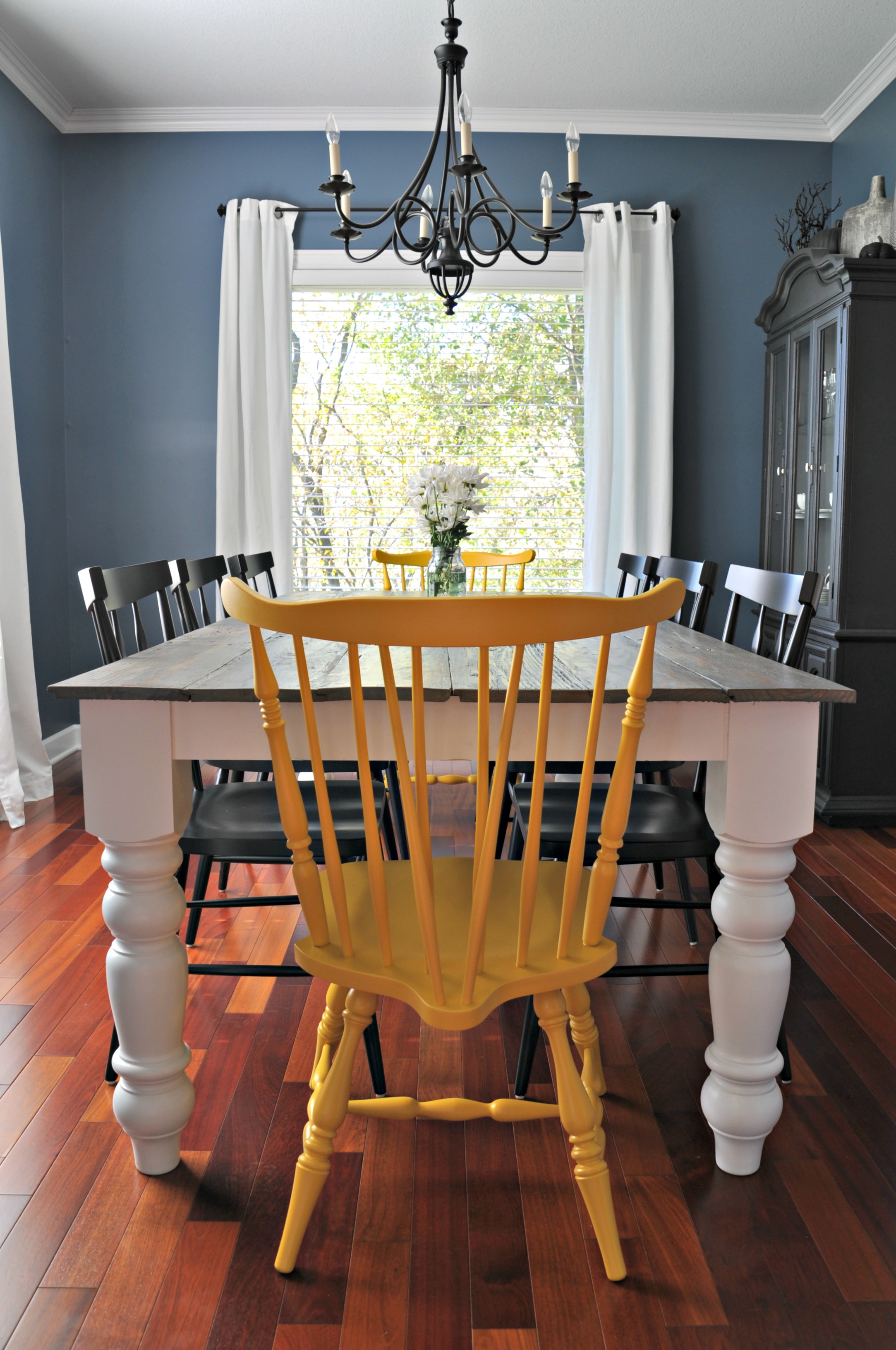
Free Farmhouse Dining Table Plans

Here are free dining table plans so you can make your own farmhouse dining table!

Material List

4 Table legs (We used these from Osborne Wood.)
3 - 1"x4"x8'
3 - 2"x4"x8'
6 - 1"x7"x8' barn boards (You can use 1"x8"x8' boards, ripped down to 7")
Kreg 1 1/4-Inch Pocket Hole Screws
Kreg Mini Jig Kit
Titebond-3 Ultimate Wood Glue
Brad Nailer
1 5/8" Brad nails (if using ship lap barn boards)

Cut list

  • 1"x4" (Apron boards)
    •  2 @ 30.25"
    • 2 @ 82"
  • 2"x4"
    • 5 @ 38"

*affiliate links included

Directions {Table Base}

Attach the 1"x4"s to the legs using pocket hole screws and wood glue, offsetting 3/8" back from the front/sides of the leg tops. 

Dinning Room Table Skirt Spacing

Assembling the table is easiest done on the floor or work bench if you have one large enough.  I recommend assembling the table upside down, as shown in the photos.  Starting from the leg, mark 10.5", 25.5", 40.5", 55.5" and 70.5" on the long 1"x4". Using these marks, attach the 2"x4"s to the 1"x4".
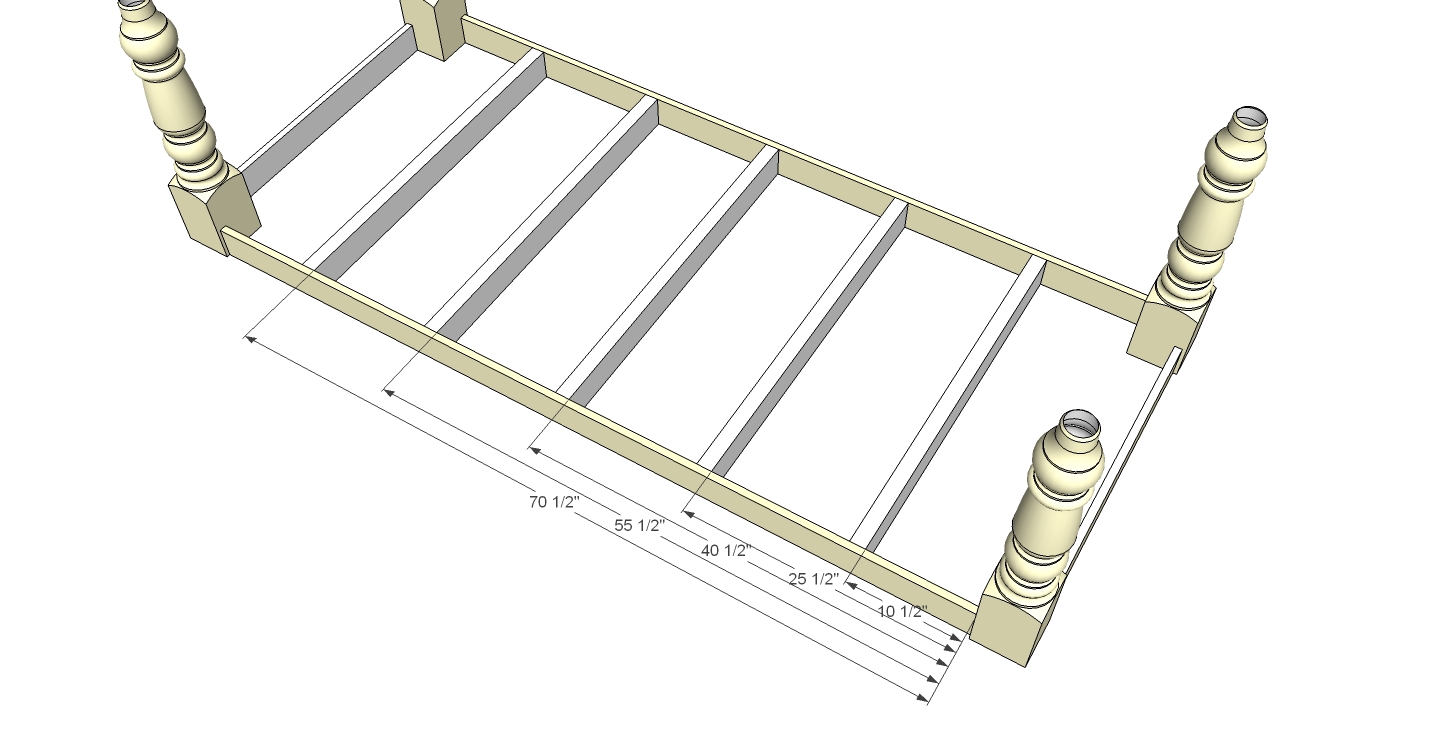
Dinning Room Table Support Dimensions

Depending on the finish of the bottom and table top, paint or stain the legs and apron. 
 

Directions {Tabletop}

On the first board you are attaching the tabletop, determine the top of the board and then flip it over.  Mark the board using the drawing below.  You need a mark 2" from the end and 1" from the side.  Flip board back over and place it on top of the table matching up the marks with the top corner of the table legs. 

Dinning Room Table Corner.jpg

If using ship lap barn boards, secure the board to the top with brad nails.  

Contuine attachign all boards with brad nails until all boards are attached.  I did have some boards that were slightly warped, as is expected with barn boards.  Really big clamps came in handy to help straighten them out.  I also had some boards that did not want to stay down with brad nails so I went under the table and drilled in some pocket holes which helped pull the board down and secure it better.

If you are not using ship lap barn boards, attach all boards using pocket hole screws, then attach top to the bottom using pocket hole screws.
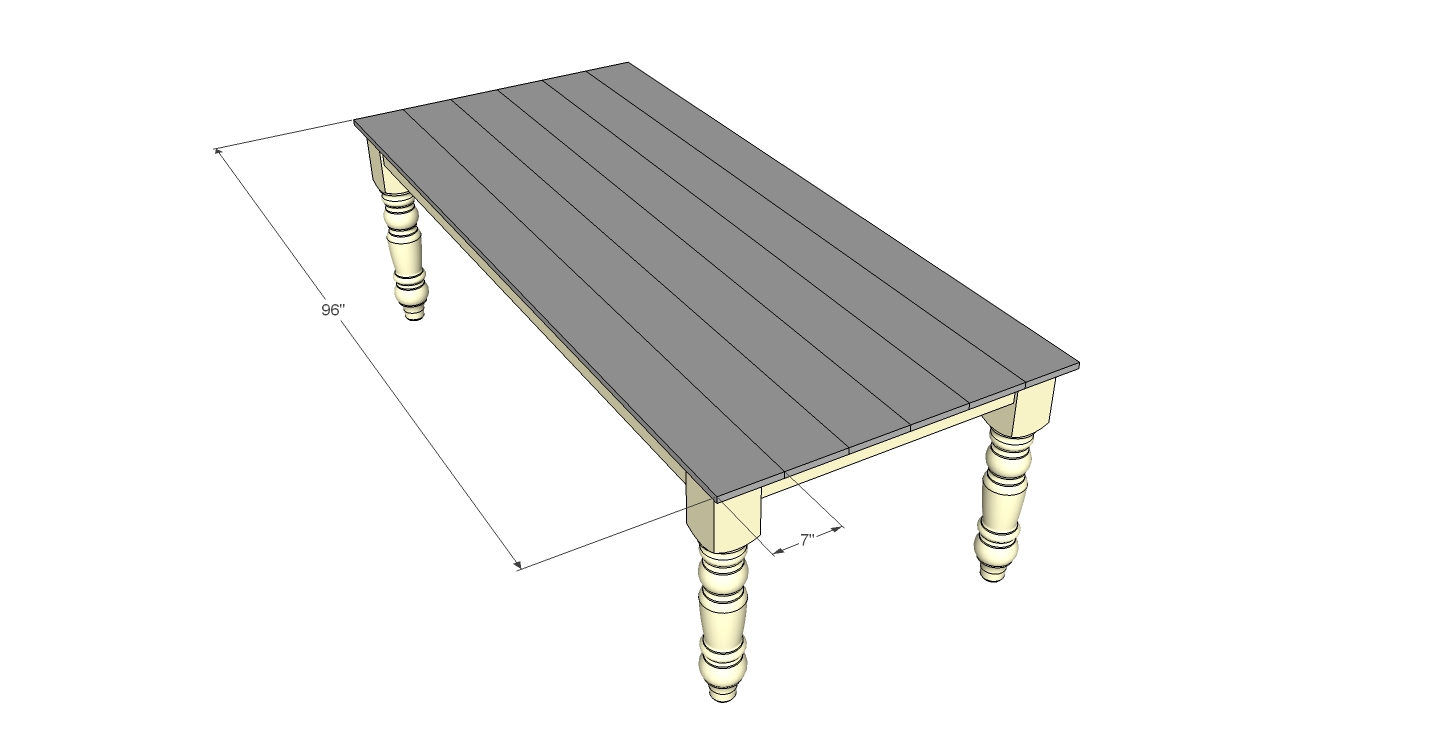
Dinning Room Table Top


A hand planer (or larger planar) really helps in starting to get the boards all level.  If you don't have a planar, a belt sander will work.  It just might take you longer.  Plane and sand the boards until all smooth.  Apply stain and poly (or paint).  Read how we finished our tabletop here.
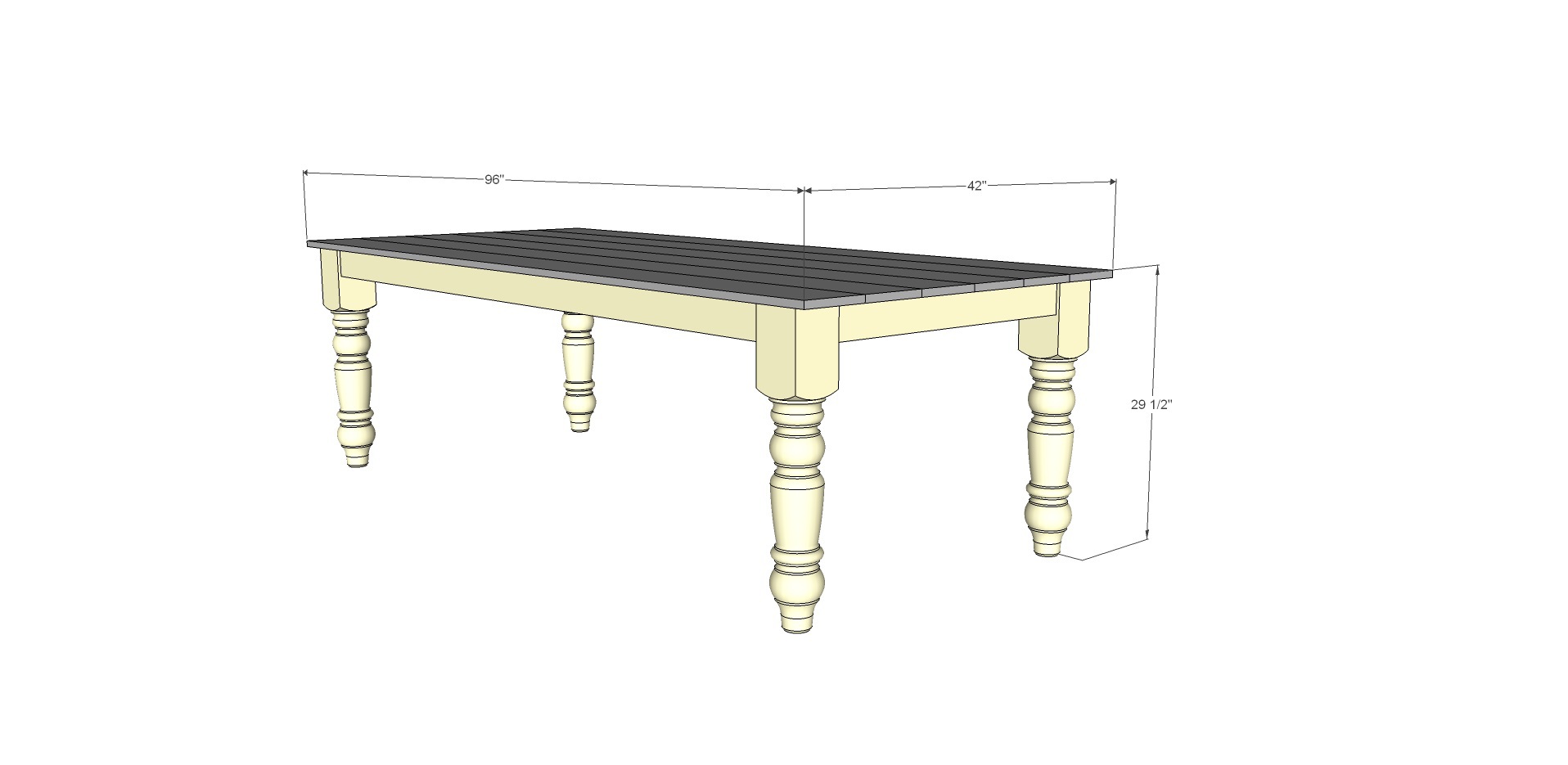
Dinning Room Table Dimensions
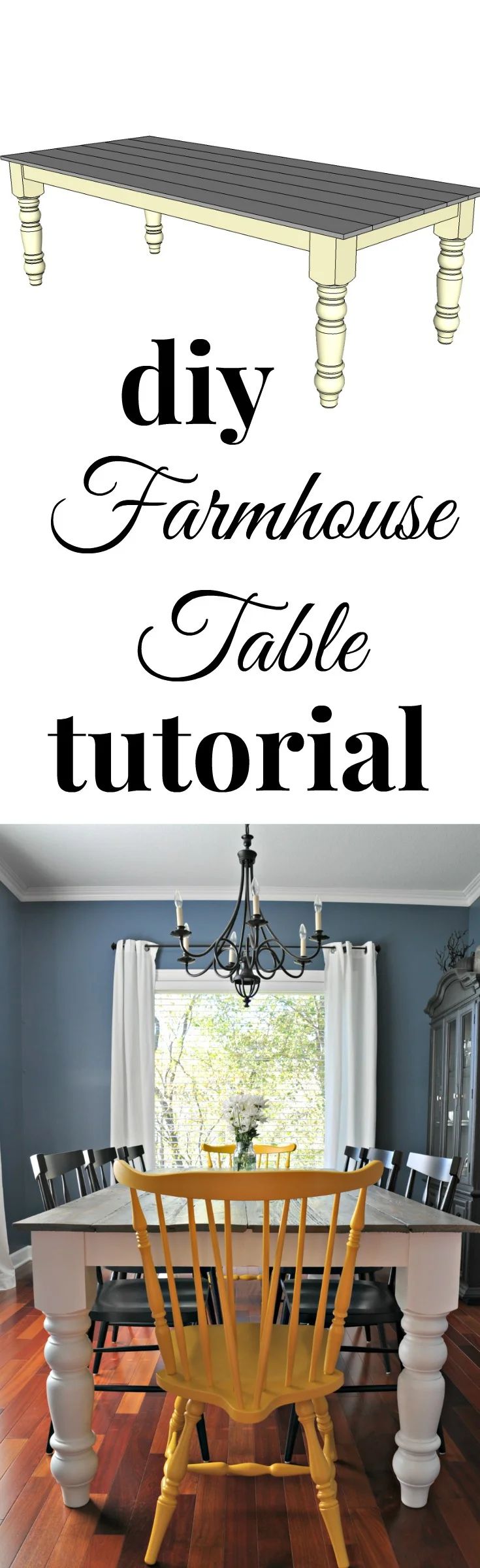
Free Farmhouse Dining Table Plans {DIY Tutorial}

Who's ready to build their own?  Do you speak Nate? ;)

Photobucket Photobucket Photobucket Photobucket PhotobucketPhotobucketfollow us in feedly

Rustic Farmhouse Dining Table

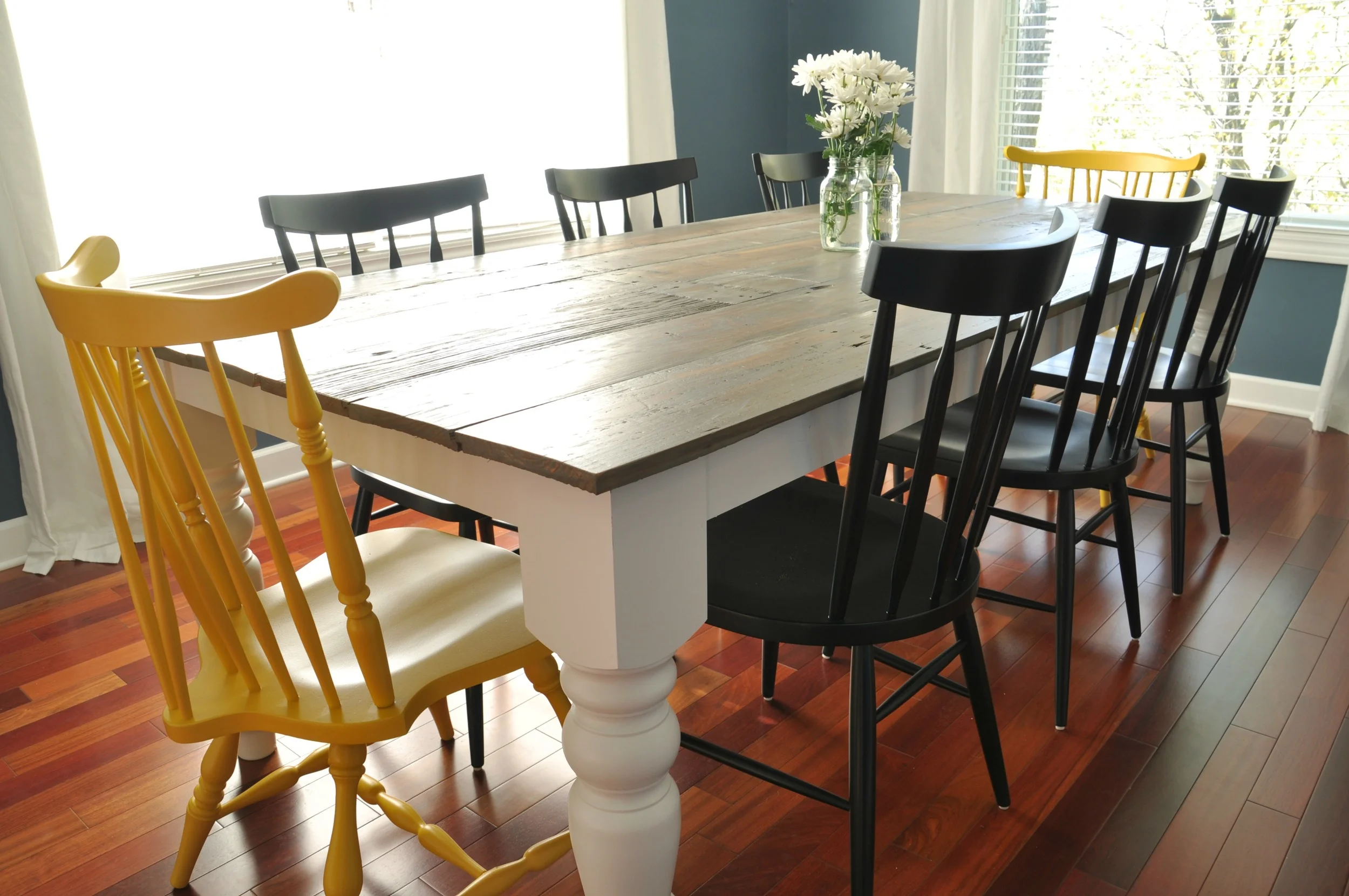
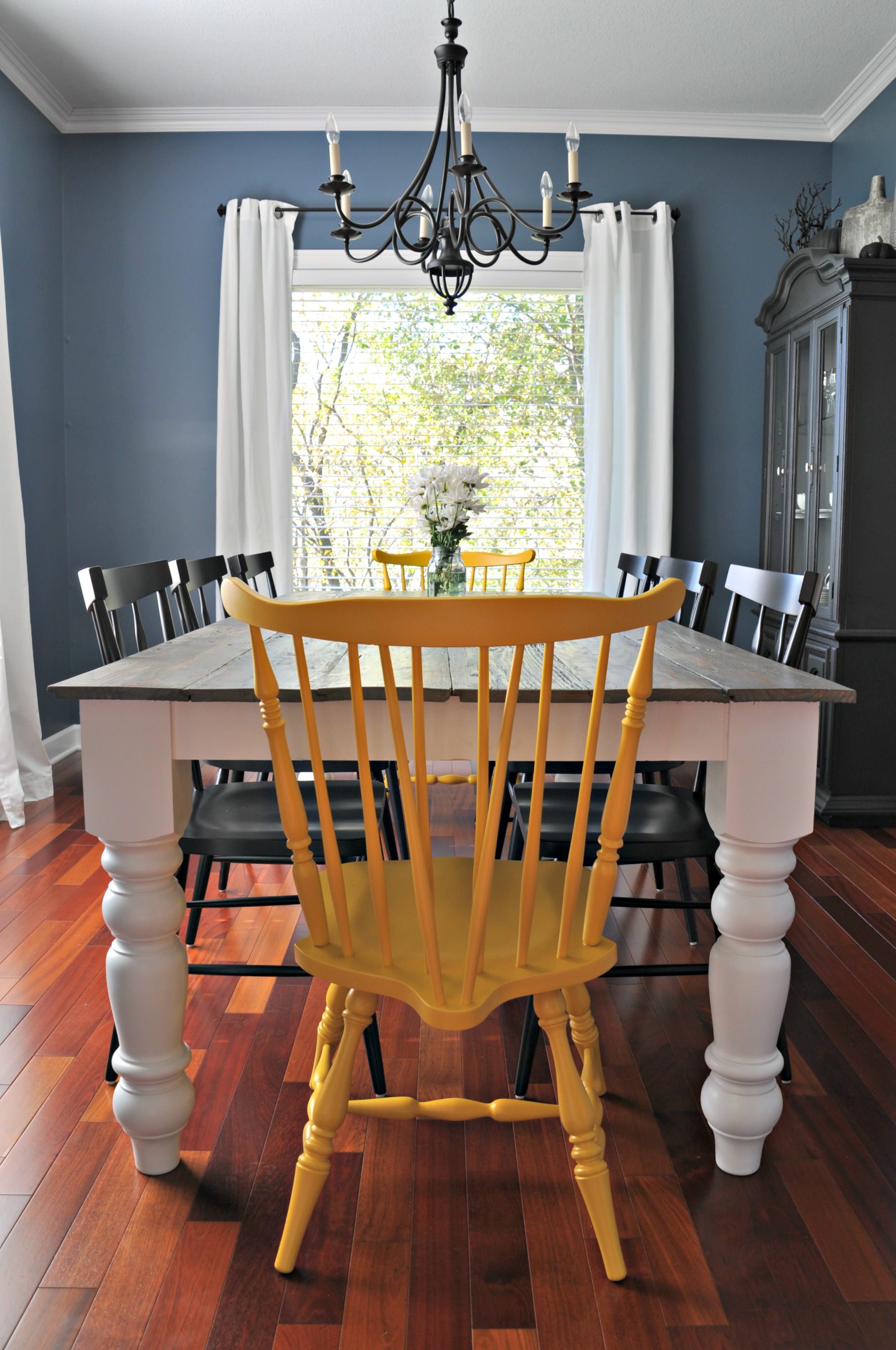
Say "hello" to our new dining room table and chairs. (Finally.  Am I right?) 

Farmhouse Table Reveal. Farmhouse table with colorful chairs!

I love how happy the room is now.  It's no longer a stuffy formal dining room. 

Farmhouse Table Reveal. Farmhouse table with colorful chairs!

We hosted a beer tasting party on Saturday night and the table worked out beautifully.  I'm pretty particular and I was always worried about our old dining table getting scratched.  I would have been hyperventilating in the corner as beer rings were added to the table top.  Instead I was able to enjoy my Moscow Mules in peace and enjoy the party.  Scratches don't matter.  Beer rings wipe right up.  All is right in my OCD world. 


Farmhouse Table Reveal. Farmhouse table with colorful chairs!

Having seating for eight versus six was pretty awesome too.   

The yellow made me a bit nervous at first. (COLOR IS SO SCARY!)  I think it's the yellow chairs that add that extra bit of fun that the room needs.   

Farmhouse Table Reveal. Farmhouse table with colorful chairs!

A random daisies in Mason jar photo because daisies and Mason jars make the world a better place.  

Daisies.jpg

Like always, one new project leads to another new project.  We are going to replace the hutch with a smaller cabinet with open shelving above it.  I love the hutch but Nate and I both feel it's making the room a little stuffier/heavier than we want it.  I'm excited for open shelving to display my ever growing Pyrex collection.  It'll be a great way to add some more color to the room as well.  Who am I?


Farmhouse Table Reveal. Farmhouse table with colorful chairs!

We'll have a full tutorial (including materials list) later this week!   Unless I flake. ;)

Here are links to past dining room post!

Are you a farmhouse table fan?  Who's pumped for open shelving? 

Linking up to: Thrifty Decor Chick

Photobucket Photobucket Photobucket Photobucket PhotobucketPhotobucketfollow us in feedly

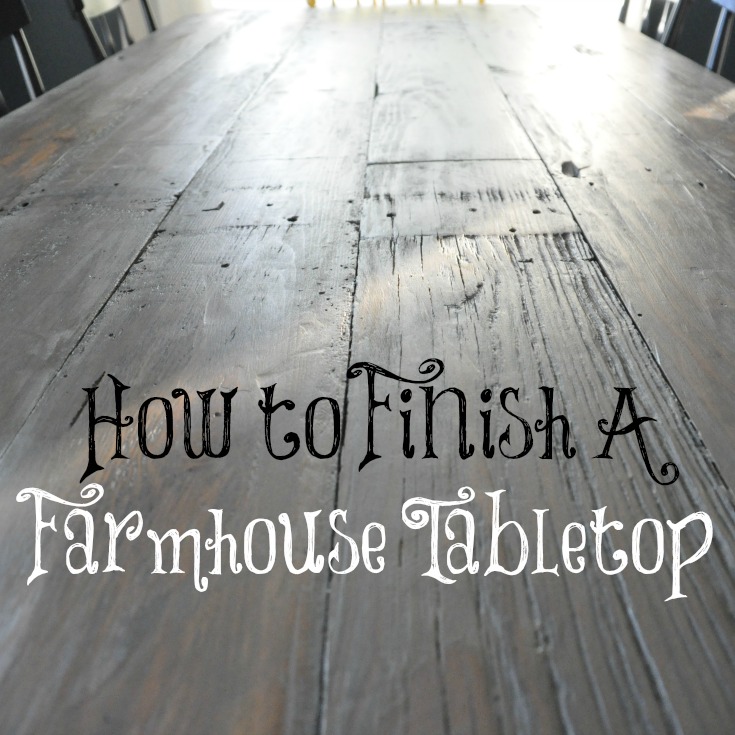
How to Finish a Farmhouse Tabletop

Today I'd like to share with you how to finish a farmhouse tabletop. 

How to Finish a Farmhouse Table from Decor and the Dog.jpg

You're probably wondering "How long can this chick drag on this farmhouse table project that we've only seen bits and pieces of?"  Valid question.  The answer is FOR-EVAH.  Or until Monday.  Whichever comes first.  Patience is a virtue (of which I don't possess.)  And the sun has refused to shine in Iowa for like 2 weeks.  Weak, Iowa. Weak.  (There are a few sunbeams in these photos but it was pretty late in the day.)

Gather Your Supplies

First you will need to gather the supplies you need to finish your tabletop. 

  1. Hand planar
  2. Belt sander
  3. Hand sander
  4. 220 grit sandpaper
  5. Goggles
  6. Mask
  7. Minwax Pre-Stain Wood Conditioner
  8. Stain (We used Rustoleum's Wood Stain in Weathered Gray.)
  9. Staining Pads
  10. Foam Brushes
  11. Polyurethane (We used Minwax's Polyurethane in satin.)

Sand, Sand, and Sand Some More

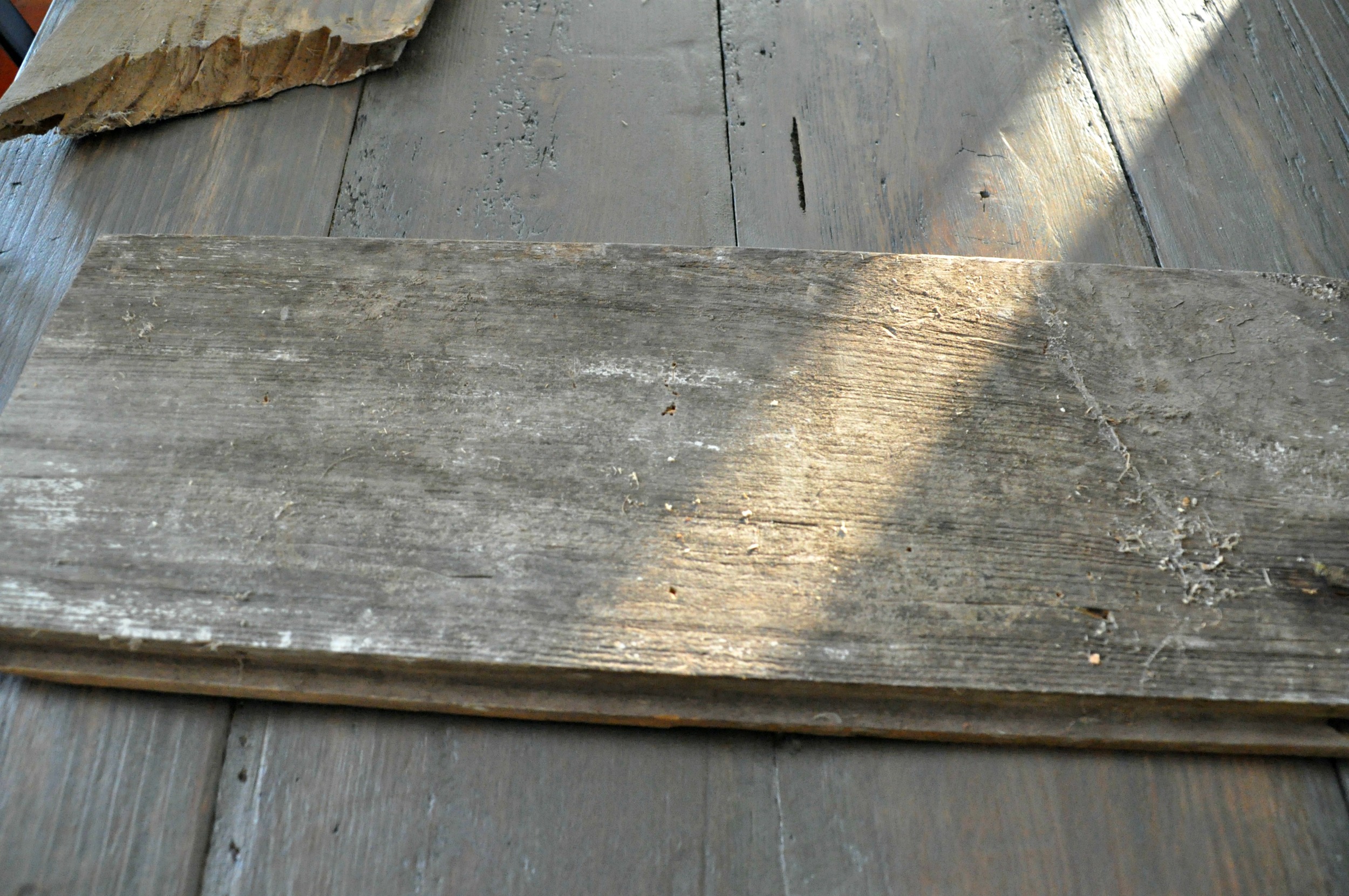
Sanding was the most time consuming part of this table build.  We started with old barn boards that interlocked.  We liked the coloring of the boards but they were pretty dirty and uneven. 

Nate started by using a hand planar to help even out the boards.  He then used a belt sander to further smooth and even out the boards.  He finished by using a hand sander for a little touch up.   (You may not need to do as much sanding if you are using new wood.)

After the sanding was complete, we vacuumed the table and then used a damp rag to remove any remaining dust. 

Below is what the boards looked like before sanding followed by what they looked like after sanding. 

How to finish a farmhouse tabletop.jpg
How to Paint Furniture.  Sanded top..jpg

Wood Conditioner

We used Minwax's Pre-Stain Wood Conditioner to help our stain look it's best.

How to Paint Furniture. Use Wood conditioner!.jpg

We used a staining pad to apply the pre-stain wood conditioner.  We let it soak in for 1-2 minutes.  We wiped off any excess. We waited 15-30 minutes and then we lightly sanded using a 220 grit sandpaper.   Stain within two hours.

The piece of wood below on the left was not treated with the pre-stain wood conditioner.  The piece on the right was.  You can see the stain is more even and looks smoother on the board that was treated with the pre-stain wood conditioner. 

How to Finish a Farmhouse Table. Wood Conditioner.jpg

We don't always use the pre-stain wood conditioner.  It depends on the project and what type of look we are going for.  We didn't love the look on these boards without it. 

Apply Your Stain and Polyurethane

We chose Rustoleum's Wood Stain in Weathered Grey.  We wanted the boards to look like their original gray color.  Just less dirty.  

We used Minwax's Polyurethane in satin.  Because that's what we always use and there is always some in our basement.  (It's easy to apply and dries well.) 

Apply stain with a staining pad.  Let sit 1-2 minutes and wipe excess.  Let the stain dry for a day.  

Apply the polyurethane with a foam.   Let dry ~6 hours.  Sand lightly with 220 grit sandpaper.  Apply a second coat.  

Wait at least 12 hours before light use.


stained table top.jpg
Farmhouse Tabletop.jpg

You can see that our table still has lots of imperfections and still looks rustic.  The beauty is that it is now clean and plates will only slightly wobble on them.  Wobbling plates is part of the charm of the reclaimed wood, right?  We love the nail holes and scratches.  We want things in our home to be less precious.  This table is precious in that it was built with love.  Not precious in the way that you only want to look at it instead of use it.

See the full table reveal here


Photobucket Photobucket Photobucket Photobucket PhotobucketPhotobucketfollow us in feedly